Welcome to NLCA 2026

7th International Conference on Natural Language Computing Advances (NLCA 2026)

October 24 ~ 25, 2026, Vienna, Austria

Hybrid--Registered authors can present their work online or face to face New

Program Committee

More Details...


Accepted Papers

More Details...


Vienna, Austria

More Details...


Scope

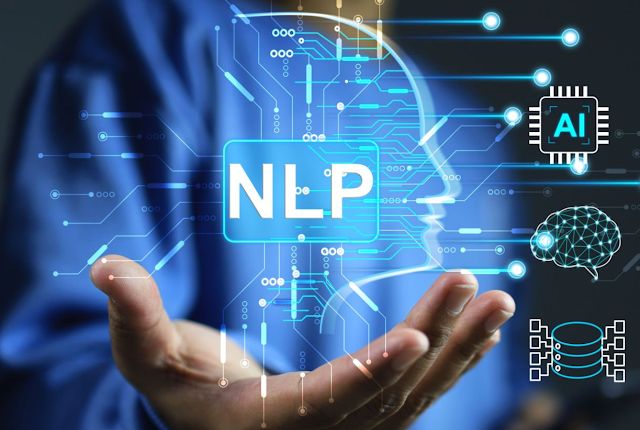
7th International Conference on Natural Language Computing Advances (NLCA 2026)provides a premier global forum for presenting and exchanging cutting edge research, theoretical insights, advanced methodologies and impactful applications across the rapidly evolving field of Natural Language Processing. As language technologies continue to transform scientific discovery, industry innovation and human–computer interaction, NLCA 2026 brings together leading researchers, practitioners and technologists to share breakthroughs, discuss emerging challenges and explore the future of intelligent language systems.

img

Call for Papers


NLCA 2026 welcomes substantial contributions in both foundational and frontier areas of NLP, including large language models, LLM reasoning and tool use, retrieval augmented generation, multimodal NLP, dialogue systems and LLM agents, machine translation and multilingual NLP, information extraction, semantic processing, speech and audio language models, efficient NLP, continual and streaming NLP, scientific NLP and responsible, explainable and secure NLP. The conference also embraces emerging domains such as synthetic data generation, dataset governance, LLM safety, hallucination mitigation, language conditioned robotics and NLP for misinformation and societal impact.

Authors are invited to submit high quality articles presenting research results, experimental studies, survey papers, industrial experiences and novel applications that highlight significant progress in Natural Language Processing and its rapidly expanding ecosystem of intelligent language technologies.

Topics of interest include, but are not limited to, the following


  • Large Language Models and Foundation Models
  • LLM Reasoning, Planning and Tool Use
  • Instruction Tuning, Alignment and RLHF
  • Prompt Engineering and In Context Learning
  • Retrieval Augmented Generation (RAG) and Long Context Retrieval
  • Neural Search, Vector Databases and LLM Enhanced Ranking
  • Multimodal NLP (Vision Language, Audio Language, Video Language)
  • Embodied NLP and Language Conditioned Robotics
  • Dialogue Systems, Conversational AI and LLM Agents
  • Machine Translation, Multilingual NLP and Cultural Adaptation
  • Information Extraction, Text Mining and Knowledge Graphs
  • Semantic Processing, NLI and Paraphrase/Entailment
  • Synthetic Data Generation and Auto Labeling
  • Efficient NLP: LoRA, MoE, Distillation and Edge Optimized LLMs
  • Continual, Streaming and Adaptive NLP
  • Speech Recognition, Synthesis and Audio LLMs
  • NLP for Healthcare, Finance, Legal and Scientific Discovery
  • NLP for Social Media, Misinformation and Digital Humanities
  • Explainable NLP, Bias/Fairness and Ethical AI
  • Robust NLP, Adversarial Attacks and Hallucination Mitigation
  • Privacy Preserving NLP and Federated Learning
  • LLM Benchmarking, Evaluation and Human in the Loop Testing

Paper Submission

Authors are invited to submit papers through the conference Submission System by September 19, 2026. Submissions must be original and should not have been published previously or be under consideration for publication while being evaluated for this conference. The proceedings of the conference will be published by Computer Science Conference Proceedings in Computer Science & Information Technology (CS & IT) series (Confirmed).

Important Dates

Second Batch: Submissions after September 14, 2026

Submission Deadline

September 19, 2026

Authors Notification

October 10, 2026

Registration & camera - Ready Paper Due

October 17, 2026

Proceedings

Hard copy of the proceedings will be distributed during the Conference. The softcopy will be available on AIRCC Digital Library

Sponsors